
Mobile surveillance units · Dallas–Fort Worth
Add Camera Coverage Where Permanent Infrastructure Doesn’t Exist Yet
When does a mobile surveillance unit make sense? Consider one when construction, vacancy or a changing site layout makes a fixed camera installation impractical. Before choosing a unit, check its view of the target area, available light, power, cellular coverage and who will respond to alerts.
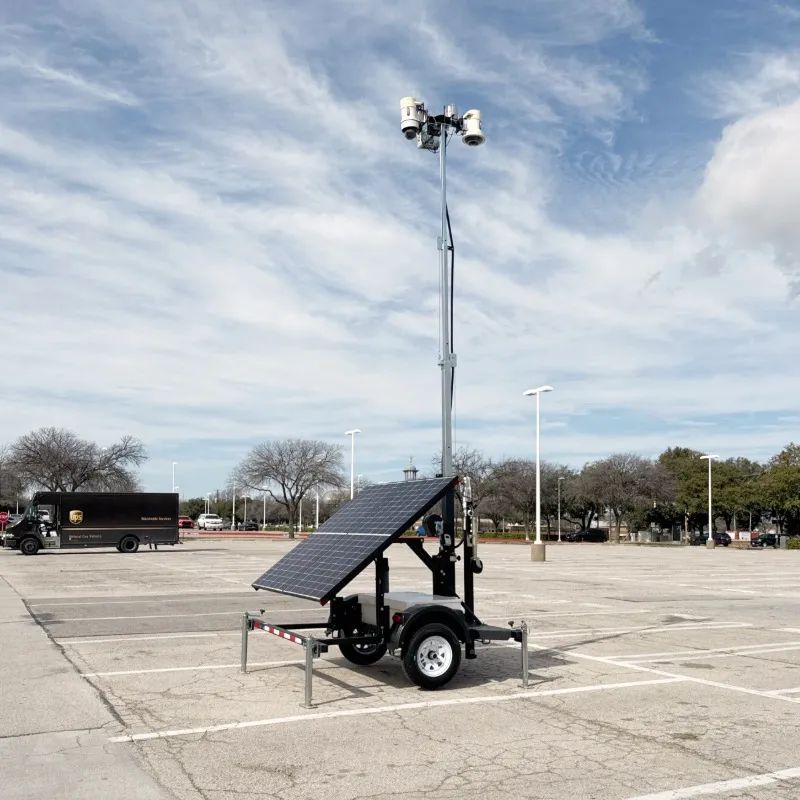
When a fixed install doesn’t fit
The Highest-Risk Sites Often Have the Least Infrastructure
An active build, a staging yard, a lot between tenants, a temporary event footprint: running power and network for a short-term need rarely makes sense, yet the risk is real.
No permanent power or network
Ground-up construction and open yards may not have a practical place to mount and power cameras.
Exposure after hours
Equipment, materials and vehicles are most vulnerable when nobody is on site, and guard coverage for every hour adds up.
Recording without review
Footage documents a loss after it happens. Teams need alerts and a defined process for who reviews them.
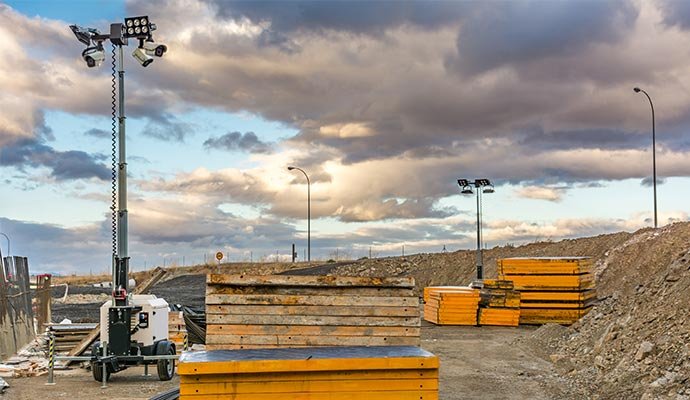
What a mobile unit can include
Configurations Confirmed During the Assessment
Runtime and connection performance depend on equipment and conditions, so we confirm each element instead of assuming it.
Compare quotes fairly
Compare by Cost Bucket, Not Headline Price
Hardware is the number most quotes lead with. Software and operating costs often decide what a deployment really costs over time.
- Hardware & chassis: trailer or tower, mast, cameras, solar, batteries, enclosure.
- Software & analytics: video management, storage, retention, alert rules and licensing.
- Ongoing operations: cellular data, cloud storage, maintenance, battery replacement, relocation.
- Ask every vendor, including us, for a multi-year projection covering all three before you sign.
Rent, lease or buy
Scenarios by Project Type
A mobile unit adds a camera position, but it isn’t right for every site. Fixed cameras, temporary mounts or existing infrastructure may fit better, and we review those options with you.
Active construction build
- Need: cover a defined build period
- Fit: renting or leasing is usually simplest, with nothing to own or store afterward
Developers and portfolio owners
- Need: coverage that moves between sites
- Fit: owning units on one cloud platform can make sense when the need recurs, with one alert inbox and one audit trail
Temporary events and vacant property
- Need: quick coverage with no permanent install
- Fit: a rapid-deploy configuration with shorter retention, removed when the event or vacancy ends
Construction sites in McKinney and nearby
- Need: after-hours visibility on equipment and materials
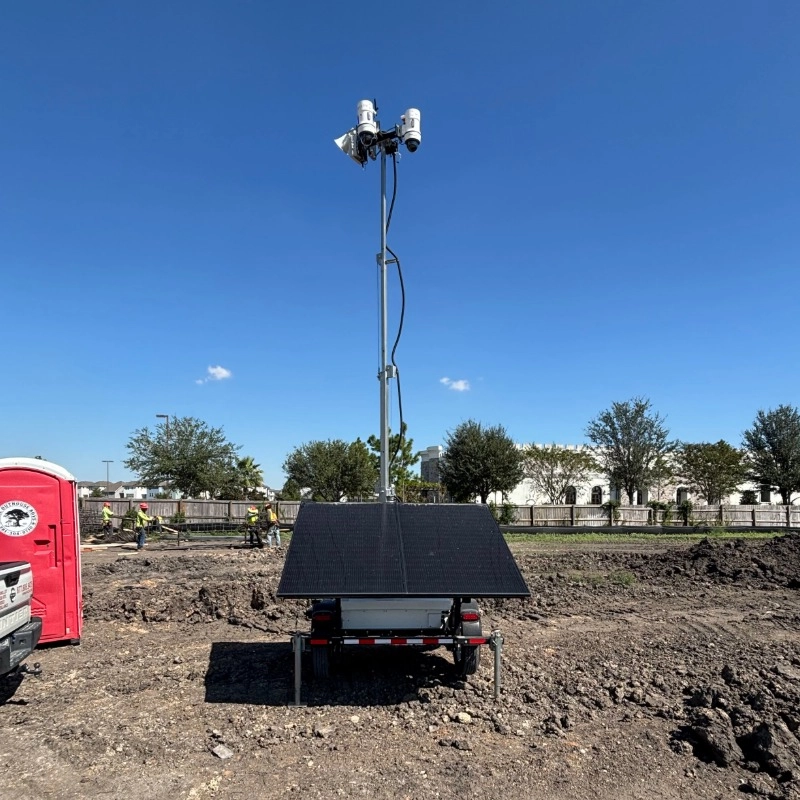
- Fit: solar trailer positioned at gates and storage areas, moved as the build progresses
In the field
Built to Follow the Work
Mobile units are placed where the exposure is, then relocated as the site, the yard or the event changes.
Our process
How We Approach a Deployment
Assess the Site
Identify gates, materials, equipment and vehicle routes that need visibility, plus power and signal conditions.
Define the Response
Agree who receives alerts, how events are reviewed and what escalation is authorized.
Place and Commission
Confirm delivery access, ground, clearances and permissions, then install, test and configure zones.
Support
Document maintenance and responsibilities so the unit keeps working as conditions change.
Relocate or Remove
Move the unit with the work, or remove it when the project ends.
Dallas–Fort Worth commercial properties
Tell Us About the Site
Share the location, timeline and what you need to protect. We’ll discuss suitable approaches and what needs to be confirmed before a proposal, serving McKinney, Plano, Frisco and surrounding communities.