
Who can enter your next confidential meeting?
Control who can enter by assigning individual credentials and access hours. A door sensor can flag an entrance left open, and compatible entrance video can show what happened at the doorway. Powerhouse Guardians helps Dallas–Fort Worth offices choose those controls for confidential meeting spaces.
Request a conference room site review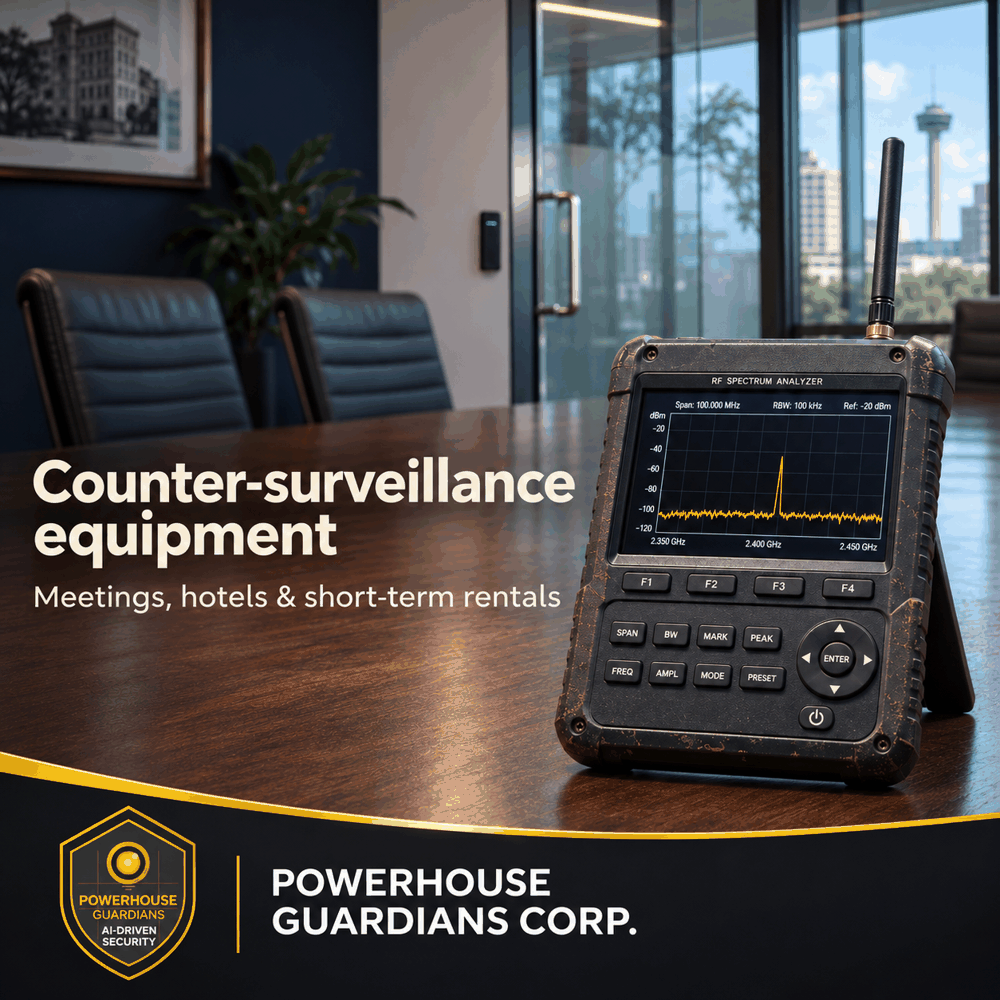
Three ways to secure a conference room entrance
Limit who can enter
Decide which staff, cleaners, and vendors need entry and during which hours. Individual credentials let a manager revoke one person’s access when an assignment ends.
Know when the door stays open
A credential reader records a badge event. A door-position sensor reports whether the door closed. With compatible equipment, a held-open alert can notify the facilities lead when someone leaves the door ajar.
Review the doorway
A camera facing the approach can show who came through after a badge was used. Frame the entrance so that whiteboards, screens, and conversations inside the room stay outside the monitoring scope.
What an after-hours badge event tells you
Suppose a Plano office schedules a confidential board meeting for 8 a.m. At 9:15 the previous evening, a vendor credential is accepted at the conference room. That entry identifies the credential. It cannot establish who carried it or whether someone followed through the door.
On a compatible system, the facilities manager can compare the timestamp with entrance video and the door’s open-and-close history. A site review should also settle who receives an alert after hours and who is authorized to review the clip.
Confidential calls in hotels and short-term rentals
On a business trip, start with what you can control. Ask who else has access to the meeting space. Check whether a shared conferencing system has recording enabled. If you cannot establish enough privacy for a sensitive discussion, move the call to a space your team controls.
Can counter-surveillance equipment confirm a room is private?
A radio-frequency (RF) analyzer can detect an active transmission within its range. A recorder that stores audio locally can record without sending a radio signal. A quiet scan alone cannot establish that a room is free of recording devices. See REI’s guide to RF and electronics detection equipment (PDF).
If you need a technical surveillance countermeasures (TSCM) sweep, seek a qualified specialist for that assignment. PGC’s site review covers the doors, credentials, alerts, and video systems at a commercial property you manage.
Plan a security review for your DFW office
Tell us which city your office is in, how many doors lead to the meeting area, and what currently happens after hours. If you already have readers or cameras, include their models so we can check compatibility. Please leave confidential meeting details out of the inquiry.
Request a commercial site review Call (469) 927-6524
Explore commercial access control, security camera installation, and office building security.